June 28, 2017

Day 7: Things I learned about driving in Poland

There are three speeds on Polish highways:     
  1. 147 km per hour in the left lane while the Mercedes driver behind you flashes his lights because you’re driving too slowly
  2. 68 km per hour in the right lane behind an enormous tourist coach from Greece or a semi truck from Slovakia
  3. 0 km per hour because there’s a little old man ambling through the crosswalk with a cane in one hand and a cigarette in the other

If you get off the highway in search of ice cream without a destination in mind, you might find yourself stuck behind this guy:

My mom snapped this photo from the passenger seat.

But you might also find views like these:

Polish cows, or krowy


In big cities, you’ll have to share the road with trains, pedestrians, and cyclists.

Which lane would you choose? 
Parking on the sidewalk is just fine.

Do what you need to do.


Waze works in Poland, but the navigation narrator has a different voice and doesn’t even try to pronounce street names.


Charming road signs will tell you when you're leaving a town, unlike American signs, which give no sense of closure:

Farewell, Zakopane.


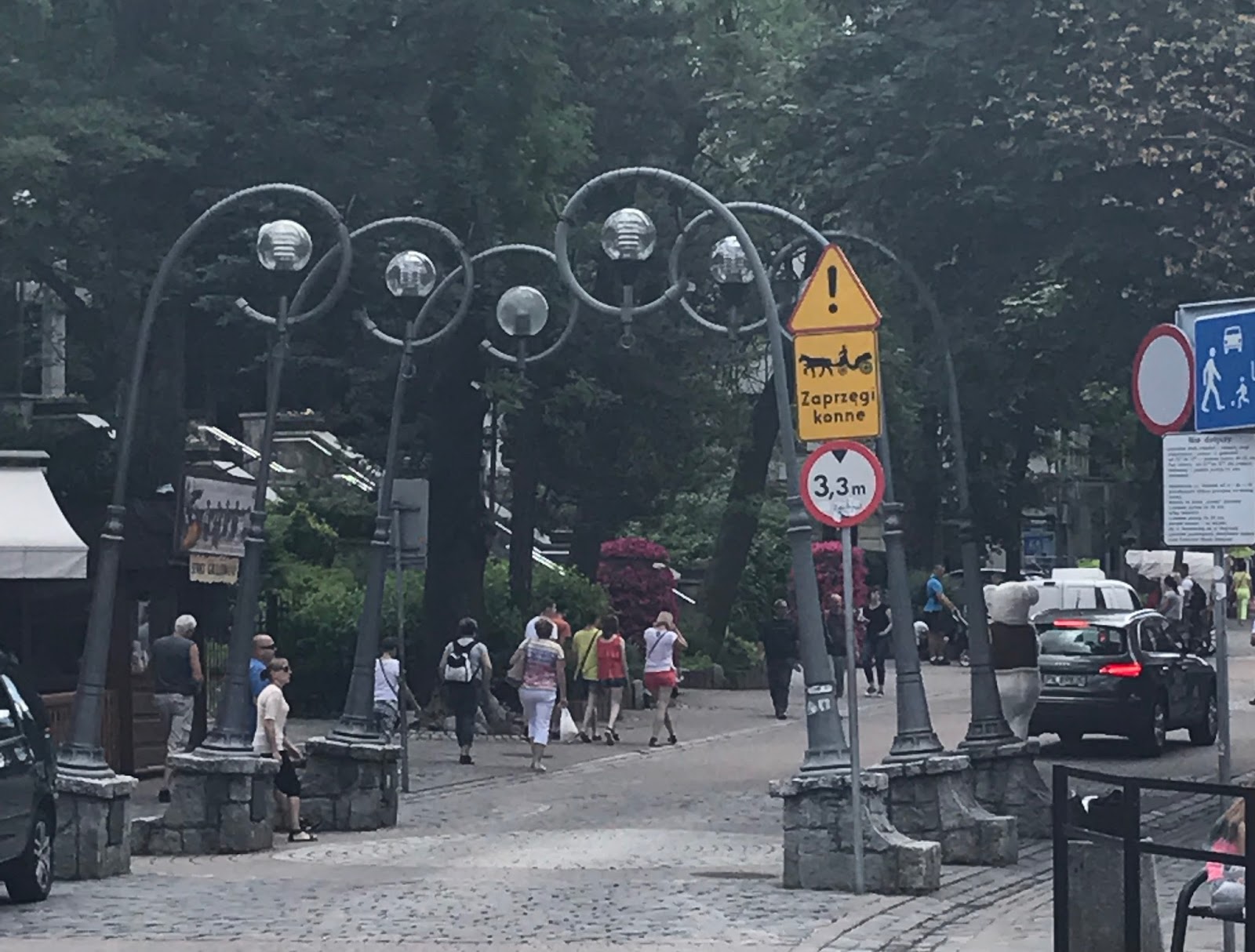
Even more charming signs will warn you about horse-drawn carriages:

Careful!


If you see a Karczma by the side of the road, it’s a place that serves traditional Polish food.

A "bar" is a restaurant.

Even the sketchiest roadside convenience stores probably have fresh bread and more meat options than the average American deli:

This place had a surprisingly fancy meat counter.

Gas station convenience stores sell hot dogs and candy, but they're just a little bit different.


At the end of a long day’s drive, there’s nothing like arriving to a house full of relatives and a home cooked meal. 

Relatives not pictured; stay tuned for tomorrow's blog.


June 26, 2017

Day 6: The Next Stop on our Tour is Zakopane

We did not go 135 meters underground into a salt mine, nor did we go to the top of a 1,120 meter mountain. In spite of our plans to do both, Earth kept us on her surface today.

On our way out of Krakow, the three of us attempted to visit the Wieliczka Salt Mine, one of the rare tourist destinations in this area that my mom had never been to before. After transportation hassles too dull to account here, we learned that the wheelchair-accessible tour only ran twice a day and we were either 2 hours late or 6 hours early. My mom could not climb 800 steps on a fractured foot, and leaving her behind for 2 hours was out of the question.


I felt bad about not researching the mine tours more carefully before showing up there.

Traffic made our 2-hour drive to Zakopane into a 4-hour one. By the time we arrived, it was probably just as well we hadn’t stayed longer at the mine. Everyone was weary. Even good-natured Evie, usually up for everything, asked if she could skip dinner and have some relaxing time alone.

While my tired tween recharged, my mother and I ate our fanciest meal of the trip; she had traditional flaki which she hadn’t tasted in almost 20 years. She stopped cooking it after my dad died; she didn’t see the point when nobody else was there to enjoy it with her. I tried a Polish duck dish, but couldn’t bring myself to have tripe with my mom.

After dinner, Evie wanted to take a cable car to the top of a mountain, but we got lost and walked in circles for half an hour before realizing we were too late. Instead, I bought her cotton candy and pizza, and I felt bad about not researching the cable car schedule more carefully.

There’s a group of Americans staying at our hotel. They’re on a two-week guided tour through Poland. I'm a little jealous. They don’t have to drive winding mountain roads in silent prayer to the patron saint of manual transmissions (St. Frances of Rome) or figure out how to open the gas tank of a rental car. They don’t have to know when things are open or how accessible they are. These tourists have paid someone else to sort out the details, and they just show up and enjoy. I asked a couple of them for directions to the mountain cable car, and they shrugged: “We just got dropped off there.”

Then I look through the pictures of my day and remember where I am and how I got here.

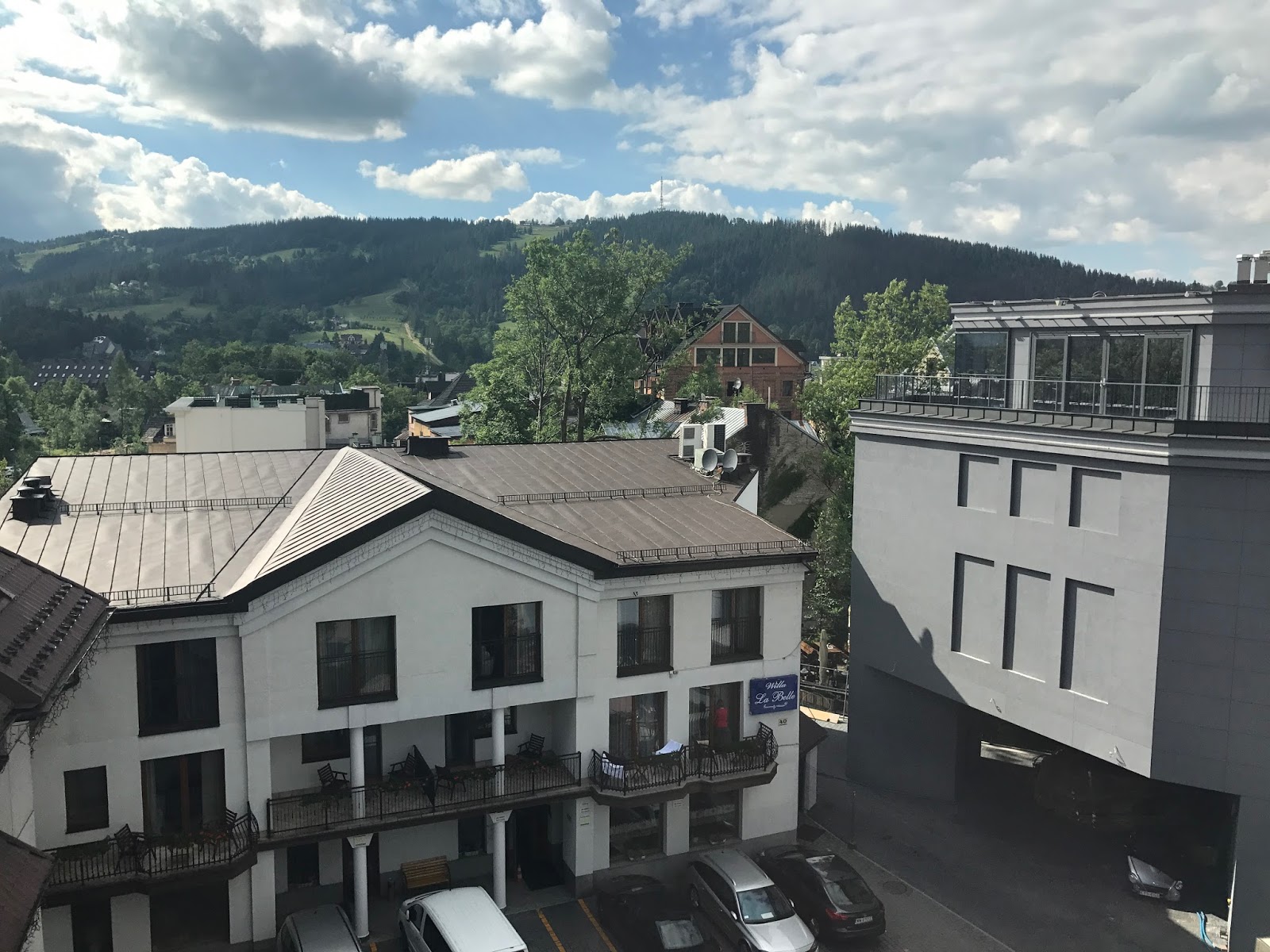
I’m in a charming town in the scenic Tatra Mountains.


There are carts on every corner selling hunks of delicious cheese.


My daughter didn’t get to a mountaintop, but she did have some moments of pure joy.


My mother didn’t get to explore the salt mine, but she did get to eat ice cream with her granddaughter and traditional Polish food with her daughter.  

I even got a non-selfie photo of me, the first of my trip.


I’m not a perfect tour guide, but I think I’m doing OK. I am going to allow myself to be proud of how far I have gotten us, and how much fun we have had.

St. Frances, I hope you’re ready to help us get to Lodz tomorrow, where my aunts and cousins will enthusiastically greet us - and take over as tour guides.


June 25, 2017

Day 5: More photos than words


Today, we visited the hills south of Krakow, the area where the second half of my grandparents' World War II story takes place. It is a primary setting for the novel I'm working on. I will find many, many words to write about this place.

But today, I just want to show you the photos.

Myslenice, where my grandfather's Underground Army (Armia Krajowa) unit was headquartered.


Dobcycze, another town in his area of command.


A memorial to the Armia Krajowa on a hill where my grandfather's unit fought against Nazi soldiers:


The view from that hill:


This rooster, who saw me trying to back up the station wagon at the top of his hill and wanted to make sure I knew who was boss:


Szczyrzyc, a monastery which gave supplies to the Resistance. My mom remembers walking here, and riding in a horse-drawn carriage to attend church and to buy candy in the town. Also, a Polish name that I am completely unable to pronounce.


The church in Gora Jana, where my mom was baptized.


A cemetery where many of my relatives are buried:


The road to Gora Jana, which my mother remembers full of dairy pastures and ramshackle cottages. Today, it is home to acres of apple orchards.


Good night, friends. I'll have more words for you tomorrow.